 How-to
Does Sports Bra Fit Change for Bench Press?
Quick Summary
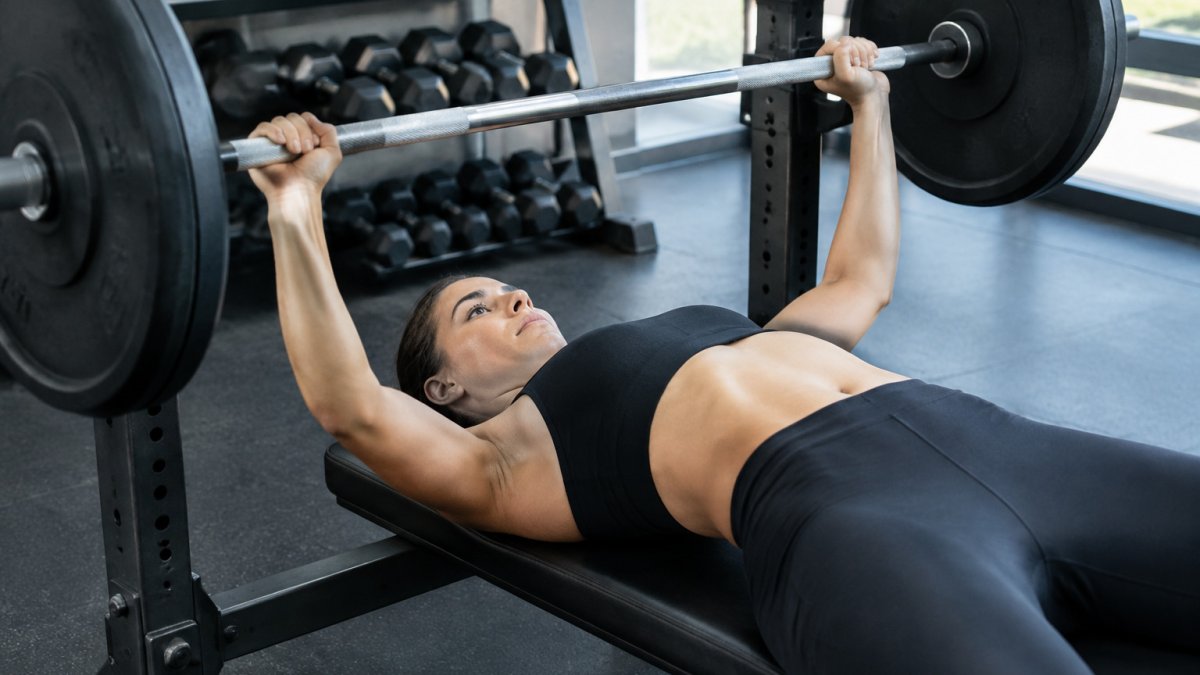
A sports bra for bench press should feel snug around the band, sit flat against the breastbone and stay secure when you lie back and press. Test the fit while lying down, since standing checks miss how the band, cups and straps shift under a loaded bar.
- Pass the two-finger test on the band while lying down and bracing, not just standing.
- Check that cups stay contained with no gaping or spillage at the top or sides.
- Make sure straps stay on the shoulder as your shoulder blades retract during the lowering phase.
- A bra that needs re-adjusting after every set is not secure enough for pressing.
- Recheck fit for incline and decline, since the bench angle shifts pressure on the chest.
Table of Contents
- Why Bench Press Changes the Fit Test
- How Should a Sports Bra Fit for Bench Press?
- Step-by-Step: Checking Fit While Lying on the Bench
- Expert View: Shoulder Blade Movement and Strap Interference
- Choosing Support for Weightlifting and Low-Impact Strength Work
- Sports Bra Fit Checklist for Bench Sessions
- Booking Your Next Fit Check: Choosing a Bra for Your Bench Days
- Frequently Asked Questions
Why Bench Press Changes the Fit Test
Lying on a bench changes how a sports bra sits on your body.
A bra that works for running does not always hold up on the bench, because bench press loads your shoulders, upper back and ribcage differently from most cardio.
So the question is not just whether a sports bra fits. It is whether it still fits when you are lying down, pressing and recovering.
How Should a Sports Bra Fit for Bench Press?
A sports bra for bench press should feel snug around the band, sit flat against the breastbone and keep your breasts secure without restricting your shoulders. The straps should stay in place when you reach up, and the bra should not ride up or shift when you lie back.
Use these basic checks as your starting point:
- Band: Level all the way round and firm, but not pinching.
- Cups: Fully contained, with no spillage or gaping at the top or sides.
- Straps: Secure on the shoulder without digging in when you press.
If any of these fail while you are lying flat, the bra is not supportive enough for heavy pressing.
Step-by-Step: Checking Fit While Lying on the Bench
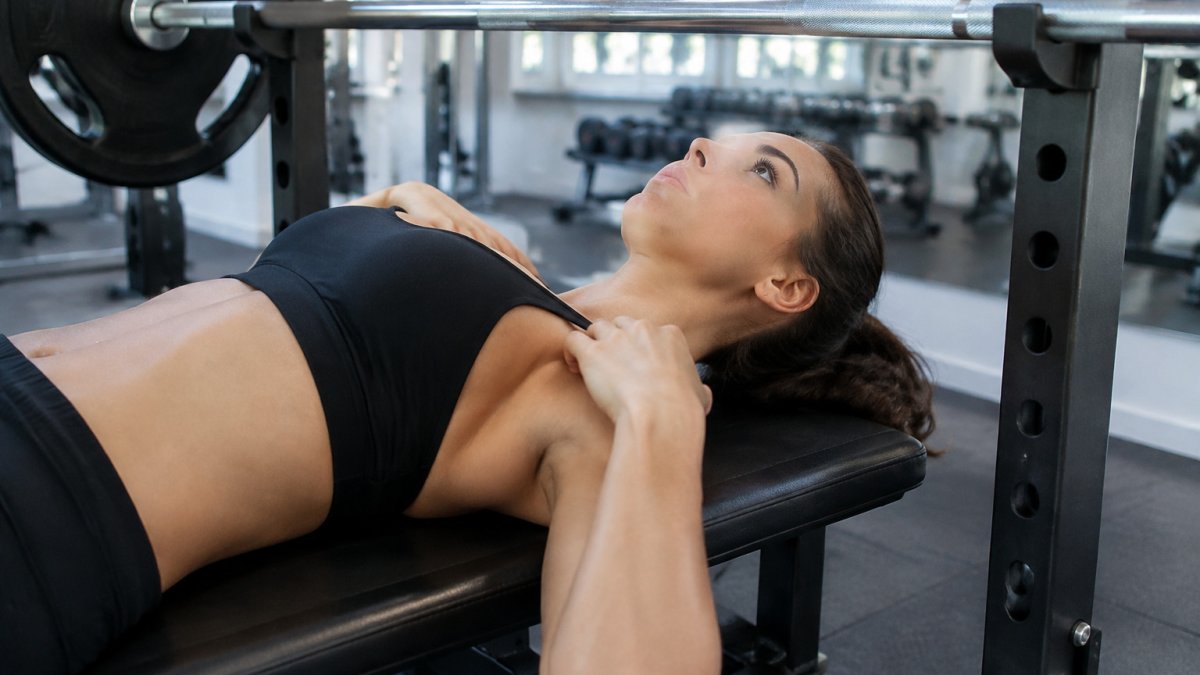
Standing fit checks tell you almost nothing about how a bra behaves when you are flat on your back with a loaded bar above your chest. Gravity, shoulder blade retraction and ribcage expansion all change where the fabric sits. Work through the checks below in order, ideally with the bar or a light dumbbell in hand so your shoulders are in a pressing position rather than relaxed at your sides.
Band and underband check
- Lie flat on a flat bench with your feet planted and your head in its normal pressing position. Take a deep breath into your belly and brace as you would before a rep.
- Slide two fingers under the front and then the back of the band. If more than two fingers fit easily, the band is too loose for pressing. If you cannot fit two, it is too tight and will restrict your breathing under load.
- Press your lower back gently into the bench and notice whether the band lifts away at the back. A band that rides up when you brace is too big in the band, even if it felt firm standing.
- Roll slightly to each side as if unracking and re-racking. The band should stay level and should not twist or bunch under your ribs.
Watch out: A band that passes the two-finger test standing can still ride up once you lie down and brace, so always repeat the test supine.
Cup coverage, gaping and breast position
- Lie flat and look down at your chest. The cups should sit flat against the breastbone with no gaping at the top edge. If the top edge lifts away, the cup is too shallow or the band is too loose.
- Press your upper arms gently against your sides and then move them out to a pressing width. The breasts should stay contained within the cups, with no spillage at the sides or under the arm.
- With one hand, gently press the centre gore against your breastbone. It should already be in contact. If you have to push it down, the band or cup size is wrong for pressing.
- Raise your hips slightly and lower them, as you might when setting up. The cups should not shift independently of the band.
Strap interference and shoulder mobility
- Hold an empty bar or a light dumbbell and set your shoulders as you would for a press. Check that the straps sit flat on the shoulder and do not dig into the front of the shoulder or the side of the neck.
- Retract your shoulder blades as you lower the bar. Straps that sit too far forward will press into the front of the shoulder as the blades move back.
- Press the bar up and reach the top of the range. The straps should stay on the shoulder without sliding toward the neck.
- Re-rack and reach both arms overhead. The bra should not ride up or pull the cups out of position.
If the straps cut in, slip off or press into the shoulder, adjust them first. If they still do not sit well, try a racerback or cross-back style, which keeps the straps closer to the centre of the back as the shoulder blades move.
Movement and pressure-point check under load
- With a light load, perform two or three full reps. Notice any pressure points under the band, at the side seams or where the straps meet the cup.
- At the bottom of the rep, check that the bra does not dig into the ribcage or restrict your brace.
- At the top of the rep, check that the cups have not shifted upward or sideways.
- After the set, stand up and notice whether the bra has moved out of position. A bra that needs re-adjusting after every set is not secure enough for pressing.
Fit adjustments for different pressing variations
- Flat bench: The standard test above applies. The main risks are band ride-up and strap pressure as the shoulder blades retract.
- Incline press: The bench angle shifts pressure toward the upper chest and front of the shoulder. Check that the top edge of the cup does not gape and that the straps do not slide toward the neck.
- Decline press: Lying head-down increases pressure on the upper chest and can make the band feel tighter. Re-check the two-finger test in this position; a band that is borderline on flat bench may be too tight on decline.
If any check fails while you are lying flat, the bra is not supportive enough for heavy pressing, regardless of how it feels standing.
The checks below summarise what to test while lying on the bench and what to do if each one fails.
| Check | What to look for | If it fails |
|---|---|---|
| Band | Passes two-finger test lying down | Adjust band size |
| Cup coverage | No gaping or spillage at top or sides | Check band and cup size |
| Breastbone contact | Centre gore sits flat without pushing | Band or cup size is wrong |
| Strap position | Stays on shoulder through full range | Adjust or try racerback/cross-back |
| Pressure points | No digging under band or at shoulder | Check hardware and seams |
| Movement under load | No shifting after two or three reps | Bra not supportive enough |
Expert View: Shoulder Blade Movement and Strap Interference
Shoulder blade movement is a major reason straps behave differently on the bench. As you lower the bar, your shoulder blades retract and move against the bench. Straps that sit too far forward or too tight can press into the front of the shoulder and rub.
The main point is simple: if your straps change position as your shoulder blades move, the bra is not secure enough for bench sessions.
Choosing Support for Weightlifting and Low-Impact Strength Work
Bench press is low impact compared with running, but it is not low demand. The bar is loaded, the shoulders move through a large range under control, and you brace hard against the bench. That combination means support choice for pressing is not simply a question of impact level. A bra that is supportive enough for running may be too restrictive for pressing, and a bra that is comfortable for yoga may not hold position under a loaded bar.
What to look for in a pressing bra
- Structured or encapsulated cups that hold each breast separately and keep it still as the shoulder blades move. Compression styles can flatten the chest and restrict breathing during a heavy brace.
- Wide, adjustable straps that stay on the shoulder through retraction and protraction. Look for straps that adjust from the front or back without hardware that digs in when you lie down.
- A firm underband that does not shift when you brace or lie back. The band should be the main source of support, not the straps.
Matching support to the pressing task
A common pattern among lifters is to choose support based on the heaviest thing they do, but pressing is better served by matching support to the range of motion and the position of the body:
- Heavy flat and decline pressing: Prioritise a firm band and encapsulated cups. The main risks are band ride-up and pressure points at the back.
- Incline pressing: Prioritise strap security and cup coverage at the top edge, since the angle shifts pressure toward the upper chest.
- Dumbbell pressing and accessory work: Prioritise freedom of shoulder movement. A slightly lighter support level with adjustable straps often works better here than a maximal-support bra.
Practical troubleshooting during a workout
Most fit problems show up mid-session, not in the changing room. Here is how to deal with the common ones without assuming you need a higher-impact bra:
- Band rolling or folding: Usually a sign the band is too loose or the underband elastic has lost tension. Try tightening the band or moving to a smaller band size with the same cup. If the band rolls only on one side, check that the bra is sitting level before you lie down.
- Straps slipping off the shoulder: Adjust the straps shorter first. If they still slip when you retract your shoulder blades, a racerback or cross-back configuration keeps them closer to the centre of the back.
- Cups shifting or gaping mid-set: Often a band problem rather than a cup problem. Re-check the two-finger test lying down. If the band is firm and the cups still gape, the cup shape may not suit your breast shape for a supine position.
A high-support bra with adjustable straps is a sensible starting point for most bench sessions because it gives you room to fine-tune the fit for different pressing variations.
For more background on supportive gear for movement, read 7 Ways Supportive Gear Improves Movement During Workouts. If you have a smaller bust and want options that stay put under load, see 7 Supportive Gym Bras for Small Busts That Actually Fit.
Sports Bra Fit Checklist for Bench Sessions
Use this checklist before every heavy bench session:
- Band is level and passes the two-finger test while lying down.
- Cups fully cover the breasts with no spillage or gaping.
- Straps stay on the shoulder when you lift your arms overhead.
If your outfit needs a matching piece for the same session, How To Choose Womens Gym Shorts Sets covers how to pick shorts that work with your bra.
Booking Your Next Fit Check: Choosing a Bra for Your Bench Days
A good fit check is the fastest way to find a bra that works on the bench. Start with your usual size, then test it lying down with the checks above. If the band rides up or the straps dig in, try a higher support level or a different strap style before you change size.
Our advice is to decide what you need from the bra first: heavy pressing support, comfort for longer sets or a style you can wear between sessions. Use the Sports Bra Sizing Guide to confirm your band and cup size before you test on the bench, and if you want a supportive option for gym training, the GrantB Core Sports Bra is a good place to start.
Frequently Asked Questions
How tight should a sports bra be for bench press?
It should feel snug and secure without digging in. Lie flat on the bench and check that the band sits level and does not ride up when you press. You should be able to take a full breath and lift your arms overhead without the straps pulling the cups out of place. If the band loosens, the bra is too big for your support needs; if you have pain, redness or marks along the ribs, it is too tight. Aim for stable cups and a band that stays put through the whole set.
Should a sports bra feel tight around the ribs?
It should feel firm around the ribs but not pinching. The band is the main source of support, so it needs to sit flat against the ribcage and stay horizontal. If it rides up when you lift the bar, the band is too loose or the size is wrong. Check the fit by lying down and pressing a light weight, then take a deep breath. Comfortable breathing matters more than a tight feel, so loosen the fit if it restricts your lungs during the set.
How do I know if my sports bra fits correctly for weightlifting?
Work through a short fit checklist. The band should stay level and firm, the cups should not gape or let the breast move freely, and the straps should not slip off the shoulders when you press. Cross-back straps often reduce strap interference with the bar path. Test the bra with the same movements you use in your sessions, including a few heavy sets, and note any shifting or chafing. A bra that stays in place through the full workout fits correctly for lifting.
How often should you replace a sports bra?
Replace a sports bra when the band stretches out, the elastic loses recovery, or the cups no longer hold their shape. Heavy training wears out support faster than light activity, so check your bra regularly if you lift several times a week. A sports bra that no longer stays put during bench sessions has lost the support it was designed to give, even if it still looks fine. GrantB Core Sports Bra is designed for high-impact support, with adjustable straps and removable pads for a tailored fit.