 Listicle
Which Trainers Are Best for Gym Workouts?
Quick Summary
The best gym trainers have a flat, firm sole, a secure heel and enough grip to hold the floor under load. Choose a low-stack, firm pair if most of your session is heavy lifting, or a flexible cross-trainer for mixed workouts. Test the fit late in the day, when feet have swelled.
- Keep the heel stack low, roughly 10-15 mm, for squats and deadlifts.
- A near-flat heel-to-toe drop of 0-4 mm suits general gym work.
- Choose a moderate cross-trainer with a firm heel and flexible forefoot for mixed sessions.
- Try trainers on in the afternoon, because feet swell during the day.
- Air shoes out after each session and rotate pairs to preserve cushioning.
Table of Contents
- What Makes a Trainer Suitable for the Gym
- Stability vs. Cushioning: Choosing the Right Balance
- How to Choose Gym Trainers for Your Training
- Weightlifting Shoes vs. Cross-Training Shoes
- Best Gym Shoes for HIIT and Cardio
- GrantB Gym Trainers Compared: Price, Fit and Use
- Choosing Your Next Pair of Gym Trainers
- Frequently Asked Questions
What Makes a Trainer Suitable for the Gym
Last Updated: November 15, 2026
Choosing the best trainers for gym workouts starts with understanding what the gym asks of your feet. Most people buy trainers for the look or the price, then wonder why their squats feel unstable. The right pair needs a flat, firm sole, a secure upper and enough grip to hold the floor under load. Estimates suggest that 82 million gym-goers wear shoes unsuited to their training (Les Mills guidance on training footwear), which is a strong reason to get this decision right from the start.
Gym trainers are built around stability first. A cushioned running shoe compresses under load, which can shift your balance during heavy lifts. A trainer with a firm midsole and a broad base gives you a stable platform to push from.
Durability matters too. Gym floors are abrasive, and shoes take repeated impact from dropped weights and quick directional changes. Look for a rubber outsole with good traction and an upper that stays supportive after months of use.
Stability vs. Cushioning: Choosing the Right Balance
Stability and cushioning pull in opposite directions, and the best trainers for gym workouts find a balance between them. The mechanism is straightforward: cushioning is compressible foam that absorbs impact, while stability is the resistance of the midsole and outsole to deformation under load. Every extra millimetre of soft foam adds comfort on a treadmill but subtracts from the firm platform you need under a barbell.
Three measurable features drive that balance, and they are worth checking before you buy:
- Stack height: The thickness of the sole under the heel. A lower stack (roughly 10-15 mm at the heel) keeps you closer to the floor and is more stable for squats and deadlifts. A higher stack (20 mm+) adds cushioning for running and plyometrics but raises your centre of gravity.
- Heel-to-toe drop: The difference in sole thickness between heel and forefoot. A near-flat drop (0-4 mm) suits lifting and general gym work because it keeps the foot level. A larger drop (8-12 mm) mimics a running shoe and encourages forward momentum, which is less useful under a loaded bar.
- Torsional rigidity: How much the shoe twists through the midfoot. A rigid shank or firm midsole resists twisting during lateral movements and heavy lifts; a flexible forefoot helps you push off during cardio.
Cushioning absorbs impact, which helps on treadmills and during plyometrics. Too much of it, though, can make the foot sink and wobble during a squat, because the foam compresses unevenly under an off-centre load. Stability comes from a firm midsole, a wider base and a secure heel counter. Lateral support keeps your foot from rolling during side-to-side movements, which is why court-style cross-trainers often have a wider forefoot and a reinforced upper.
Foot type changes the calculation. A lifter with a high, rigid arch generally tolerates a firmer shoe because the arch already provides some natural suspension; a flatter foot often benefits from a slightly more supportive footbed and a firmer midsole to limit over-pronation under load.
A practical rule: if more than half your session is spent under a loaded bar, prioritise a firm, low-stack sole. If more than half is cardio or circuit work, accept a little more cushioning and flexibility. For mixed sessions, a moderate cross-trainer with a firm heel and a flexible forefoot is the safer compromise. Watch out: a shoe that feels plush in the shop may feel unstable in the rack, so test a bodyweight squat and a single-leg balance before committing.
How to Choose Gym Trainers for Your Training
The right gym trainer depends on what you do most. Start by listing your main activities. If you lift heavy, prioritise a firm sole and a snug heel. If you run intervals or do circuit work, look for flexibility and breathability.
Check these features before you buy:
- Outsole grip: A rubber outsole with a flat pattern suits gym floors.
- Heel security: The heel should not slip when you move.
- Upper fit: Your toes should have room, but your midfoot should feel locked in.
- Breathability: Mesh uppers help keep your feet cool during long sessions.
Watch out: Trying trainers on in the afternoon is more reliable than the morning, because feet swell during the day. Choose a pair that feels comfortable at the end of the day, not just in the shop.
Weightlifting Shoes vs. Cross-Training Shoes
Weightlifting shoes and cross-training shoes solve different problems, and the choice comes down to how much of your training is spent under a loaded bar versus moving in other directions.
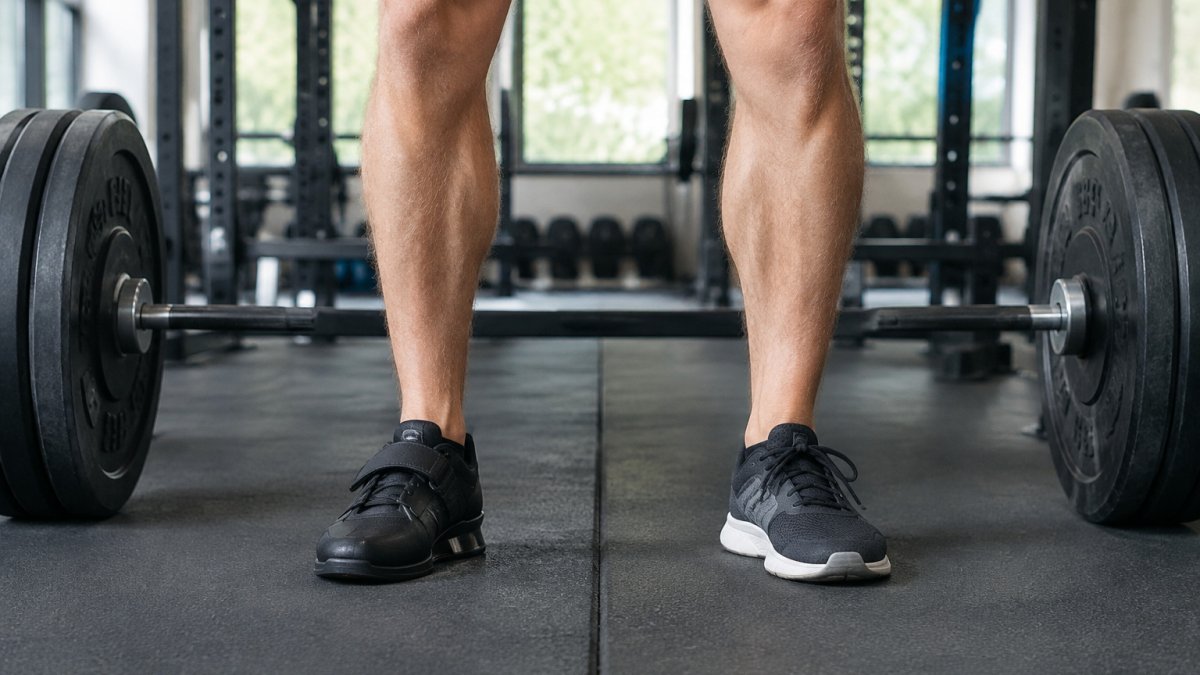
Weightlifting shoes generally have a raised, firm heel and a rigid sole. The raised heel compensates for limited ankle dorsiflexion, letting you reach squat depth with a more upright torso, while the rigid sole stops the foot from spreading under load. That combination improves balance and force transfer in the squat, deadlift and overhead press. The trade-off is that they are poor for running, jumping and lateral work: the stiff sole and elevated heel make them clumsy outside the rack.
Cross-training shoes have a flatter, more flexible base that suits a range of movements, from lifting to skipping to short shuttle runs. They usually pair a firm heel with a slightly more cushioned and flexible forefoot, so you can lift, do circuit work and handle moderate cardio in one pair. For most gym-goers, a flat cross-training trainer is the more versatile choice, because it covers the majority of a mixed session without forcing a change of shoe.
Serious lifters who squat heavily may prefer a dedicated lifting shoe, because the elevated heel and firm base give more support under load and can help those with tight ankles hit depth. A common pattern is to keep a pair of lifting shoes for heavy squat and overhead days and a flatter cross-trainer for everything else.
Whichever you choose, longevity depends on care. Gym shoes take repeated impact, sweat and abrasive floor contact, and most are built from synthetic mesh and foam that degrade faster than leather. A few habits extend their life:
- Air them after every session. Pull the insoles out and let the shoes dry at room temperature; leaving damp shoes in a gym bag breaks down the foam and encourages odour.
- Wipe the outsole. Grit trapped in the tread reduces grip on smooth gym floors and wears the rubber faster.
- Rotate pairs. Alternating between two pairs gives the foam midsole time to recover its shape, which preserves cushioning for longer.
- Avoid the washing machine. Heat and tumbling distort the midsole and weaken the upper's bonding; hand-clean with a damp cloth and mild soap instead.
Watch out: a rigid lifting shoe with a raised heel is not a substitute for a general gym trainer, and wearing one for cardio or lateral work can increase the risk of rolling an ankle.
Best Gym Shoes for HIIT and Cardio
For HIIT and cardio, you need a shoe that handles fast direction changes and repeated impact. Look for a moderate cushion, a flexible forefoot and a secure heel. The Nike Downshifter 14, at £59.95, pairs a breathable mesh upper with a soft foam midsole and a durable rubber outsole, and is designed for everyday runs and workouts. You can also see how performance gear was tested for CrossFit-style workouts. For a bolder look, the Nike Jordan Tatum 4 SE at £68.00 has a padded ankle collar and a chunky sole, and is better suited to casual wear.
GrantB Gym Trainers Compared: Price, Fit and Use
Here is how the GrantB Sportswear trainers in this article compare on price and use:
| Trainer | Price | Best use |
|---|---|---|
| Nike Downshifter 14 | £59.95 | Cardio and everyday wear |
| NIKE Jordan Max Aura 7 | £56.00 | Casual wear, light training |
| NIKE Jordan Access | £59.00 | Casual and streetwear |
| NIKE Jordan Tatum 4 SE | £68.00 | Casual wear with a bold look |
| Nike Jordan MVP 92 | £85.00 | Streetwear |
Price
Best for: Gym-goers who want a versatile everyday trainer with a light, breathable build.
Skip if: You need a firm, stable platform for heavy compound lifts. Choose a flatter, more rigid trainer instead.
Choosing Your Next Pair of Gym Trainers
The best trainers for gym workouts match your training style, not just your budget. Decide whether stability or cushioning matters more, check the outsole and heel fit, and test the shoe in a session before committing. Browse the GrantB Sportswear range to compare the options, and pick a pair that supports the way you train.
Frequently Asked Questions
What is the difference between running shoes and gym trainers?
Running shoes are built for forward motion, with soft, high cushioning and a curved sole that rolls you from heel to toe. Gym trainers are designed for lateral movement, lifting and changing direction, so they usually have a flatter, firmer base and a more stable heel. That stability helps power transfer during squats and deadlifts, where a soft, compressible midsole can let your foot move under load. Many people use running shoes for cardio and treadmill work, but for heavy compound lifts a flat, supportive trainer is the better choice.
Do I need different trainers for weightlifting and cardio?
Not always, but the demands differ. Weightlifting rewards a firm, flat sole and a secure heel, while cardio and HIIT reward some cushioning and flexibility for jumping and sprinting. The Nike Downshifter 14, priced at £59.95, is designed for everyday runs and workouts. If you lift heavy several times a week, a separate, flatter pair for the weights area is worth considering.
How often should I replace my gym trainers?
Replace gym trainers when the midsole no longer feels supportive, the heel counter loosens, or the outsole tread wears smooth, which reduces grip on the gym floor. Rotating two pairs can extend the life of each, since the foam has time to recover between sessions.
What features should I look for in a versatile gym shoe?
Look for a stable, relatively flat heel, a supportive upper that holds your foot in place, and a durable rubber outsole with good traction. Breathable mesh helps during long sessions, and a padded collar improves comfort. Choose a fit that is snug through the midfoot and has enough room in the toe box. The NIKE Jordan MVP 92, at £85.00, has a cushioned sole for comfort throughout the day.