 Listicle
How to Layer Yoga Tops for Every Class Type
Last Updated: November 24, 2026
Quick Summary
The best yoga tops for layering are fitted, moisture-wicking nylon-elastane pieces built as a three-layer kit: a base layer, a removable mid layer, and an outer layer for before and after class. Choose the layers by studio temperature, not the weather outside.
- Hot classes of 32-40°C need only a vest or high-support sports bra as a base layer.
- Look for elastane content of 20% or more for elasticity and shape retention.
- A longer top should reach at least the top of your leggings waistband and fit snug at the waist.
- Wear the mid layer for the first ten minutes and final relaxation of a warm vinyasa class.
- The three-piece GrantB kit costs £89.93 and covers every class on the timetable.
Table of Contents
- What Should I Wear to Yoga Class?
- The Best Fabric for Yoga Tops: What Actually Works
- Long Yoga Tops for Coverage in Inversions
- Yoga Vest Tops: The Lightest Layer You Can Wear
- Layering for Temperature: Hot, Warm and Cold Studios
- Fit, Necklines and Sleeves: Getting the Details Right
- Caring for Technical Yoga Tops So They Last
- Building Your Layering Kit with GrantB
- Frequently Asked Questions
What Should I Wear to Yoga Class?
Wear a fitted, moisture-wicking base layer with a second layer you can remove once you warm up. That is the short answer, and it holds for every class type, from slow yin to a 40°C hot room.
The global yoga clothing market hit £41.6B in 2025 and is forecast to reach £73.1B by 2033, growing at 7.3% a year according to Grand View Research's yoga apparel market analysis. That spending reflects something real: the right layers change how a class feels. This guide from GrantB Sportswear breaks down which tops work for which class, how to layer for temperature, and how to care for technical fabrics so they last.
Below, we cover the fabrics that actually perform, the fit details that prevent wardrobe malfunctions, and a layering kit you can build in three pieces.
The Best Fabric for Yoga Tops: What Actually Works
The best fabric for yoga tops is a nylon-elastane blend with four-way stretch and moisture-wicking properties. It moves with you, dries quickly, and holds its shape through repeated washing.
For hot yoga, that matters. Glamour's guide to what to wear to yoga class notes that hot classes run between 32°C and 40°C, where breathable, sweat-wicking fabric is the difference between comfortable and soaked.
Look for these markers on the label:
- Nylon or polyester blends for durability and quick-dry performance
- Elastane content of 20% or more for elasticity and shape retention
- Seamless construction to reduce chafing in inversions
- Breathable knit panels at the back and underarms
If you want a deeper explainer on how these fabrics are engineered, read our guide to what technical fabric activewear actually is.
Long Yoga Tops for Coverage in Inversions
Long yoga tops solve the single most common class problem: your top sliding toward your face in downward dog. A waist-length or hip-length fitted top stays put when gravity is working against you.
REI's guidance on choosing yoga clothes is blunt about this. Tops should sit snug around the hips and waist so they do not ride up during inversions or obscure your face in forward folds. Length alone is not enough; the hem needs some grip.
Three details to check before buying a longer top:
- Hem length that reaches at least the top of your leggings waistband
- Fitted through the waist rather than loose, so fabric cannot travel upward
- A high-neck or scooped neckline that stays flat when you invert
Pair a longer top with high-waisted leggings and you have solved coverage without adding bulk.
Yoga Vest Tops: The Lightest Layer You Can Wear
Yoga vest tops are the lightest layer in a class kit. They work as a base layer under a jacket, or on their own in a warm studio.
Our GrantB Studio Vest is a lightweight, breathable performance vest in a 78% nylon, 22% elastane blend with four-way stretch. At £19.99, it is a simple piece that pairs with leggings and shorts.
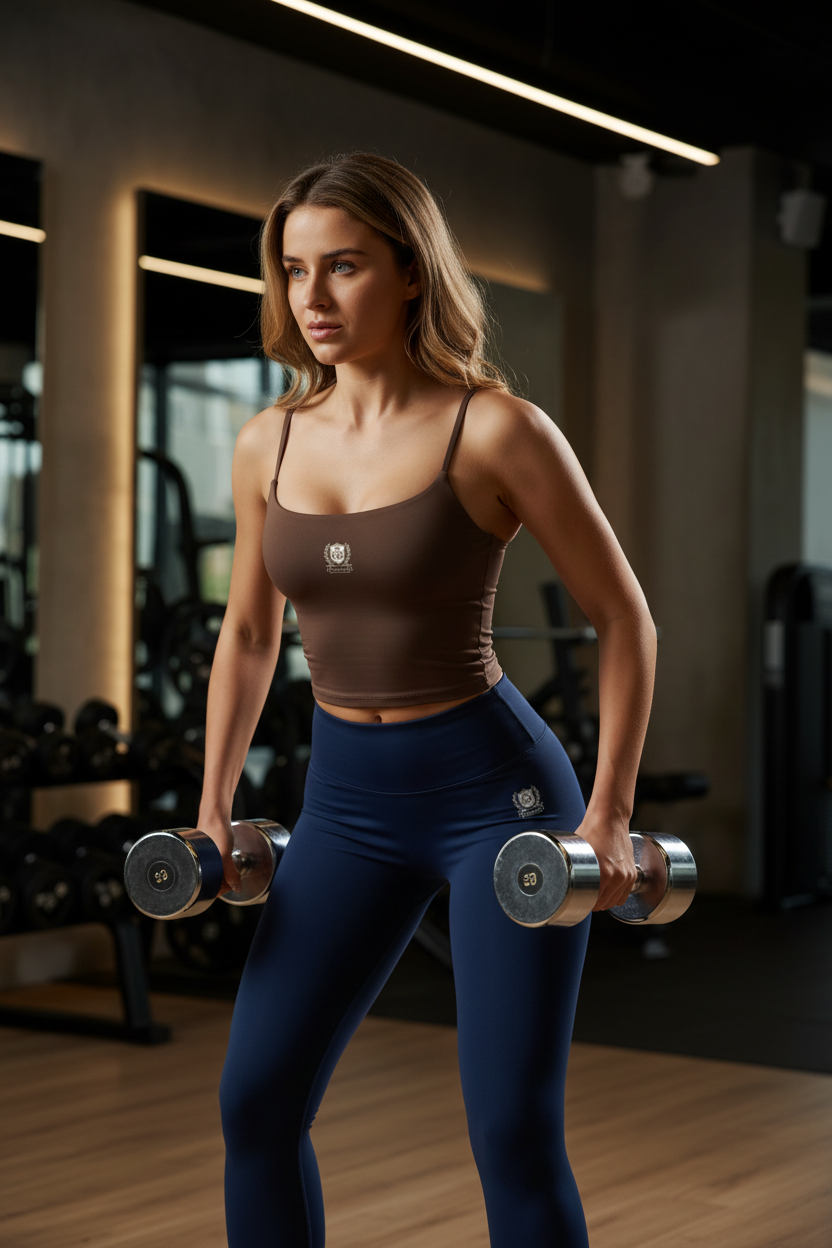
For a fuller breakdown of cuts and styling, our guide to yoga vest tops for women covers the options in more detail.
Best for: warm studios, layering under a jacket, and anyone who runs hot. Skip if: you want sleeve coverage for cold studios or floor work.
Layering for Temperature: Hot, Warm and Cold Studios
Layer for the studio temperature, not the weather outside. A hot class and a cold studio demand opposite strategies, and the layer you remove mid-class matters as much as the one you keep on.
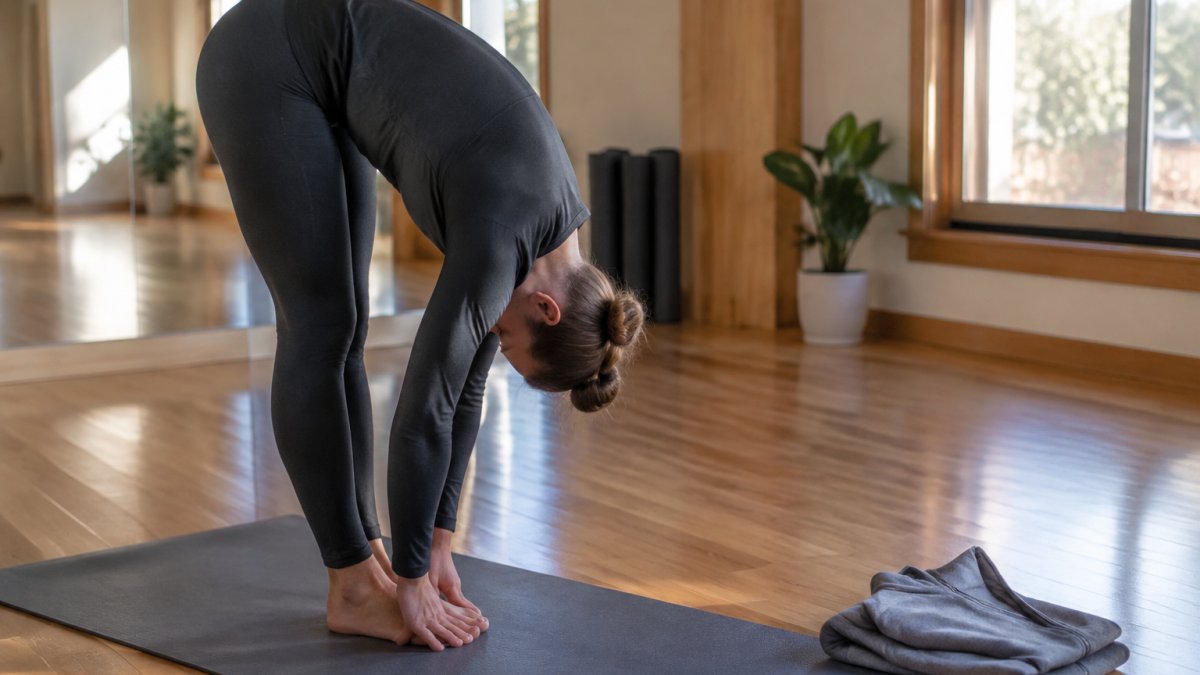
The mistake most people make is treating "yoga" as one temperature. It is not. A 38°C hot class, a 24°C vinyasa studio and an unheated church hall for yin are three different layering problems, and the layer that saves you in one will sabotage you in another.
Start with the class, not the forecast
The layer you wear should be chosen by the heat the room will reach and the pace the teacher will set. A slow yin class in a warm room still chills you because you are static; a fast vinyasa in a cool room still overheats you because you are moving. Match the layer to the metabolic demand, then adjust for room temperature.
| Class type | Typical room | Base layer | Mid layer | Outer layer |
|---|---|---|---|---|
| Hot yoga (Bikram-style, 32-40°C) | 32-40°C | Vest or high-support sports bra | None | None |
| Warm vinyasa / flow | 22-28°C | Vest or fitted tee | Lightweight long-sleeve | None |
| Yin / restorative (unheated) | 18-22°C | Fitted tee | Studio Top | Performance Jacket |
| Strength or sculpt in a cool studio | Under 20°C | Fitted tee | Studio Top | Performance Jacket |
The mechanics of each layer
Base layer. This is the piece that touches skin and does the moisture work. In a hot room, a vest or high-support bra in a nylon-elastane blend moves sweat away from the body so it can evaporate; cotton would hold it against you. In a cold studio, the base layer still needs to be fitted, because a loose base traps cold air against the skin when you slow down.
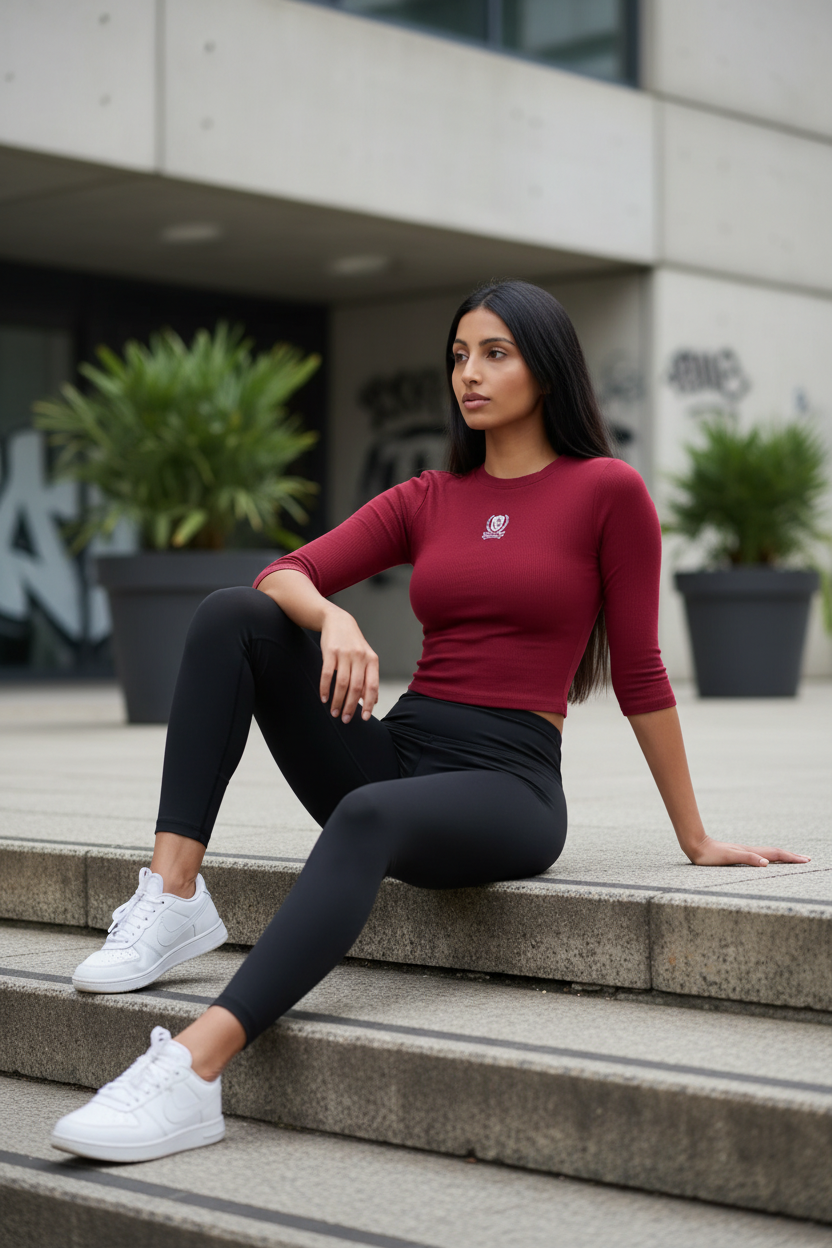
Mid layer. This is the removable piece. It should be easy to shed without leaving the mat, a pullover or a zip-front top rather than something you have to wrestle over your head mid-flow. The GrantB Studio Top at £24.99 is a 3/4-sleeve, waist-length top.
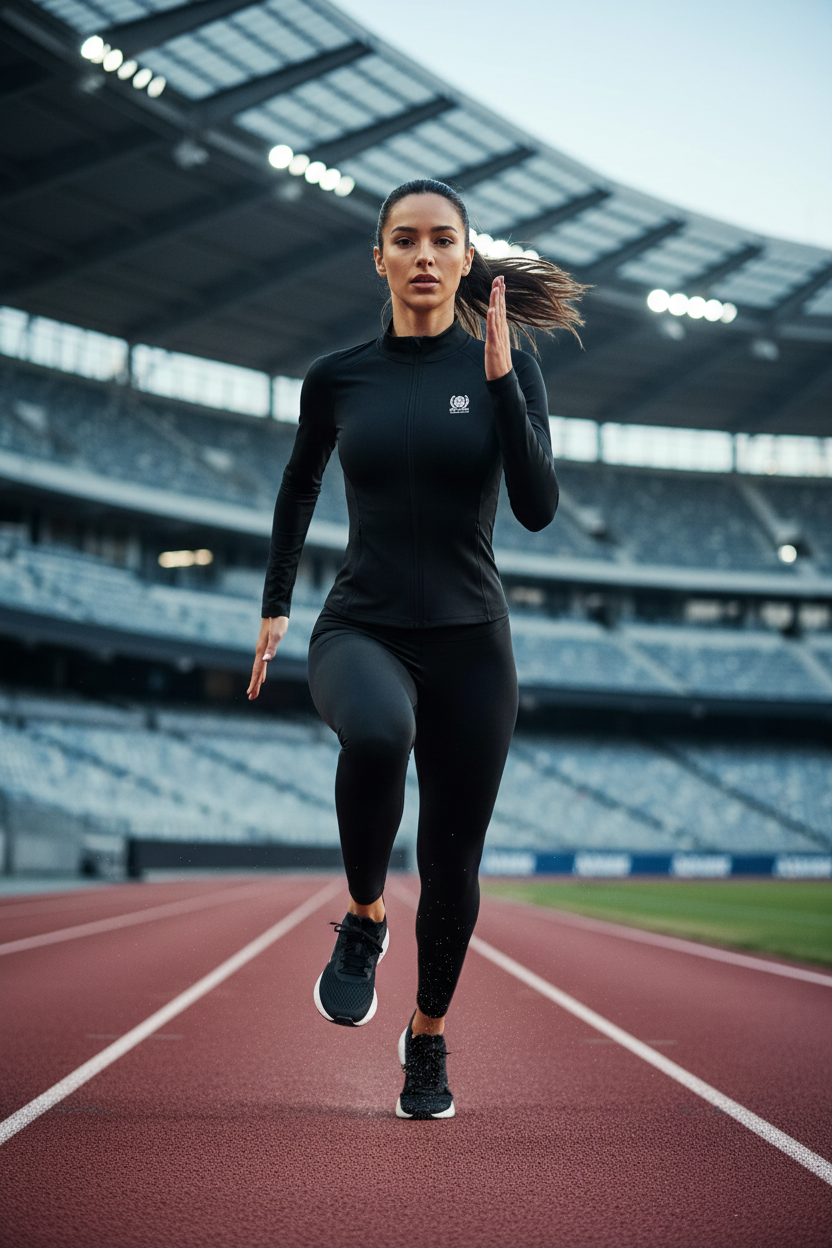
Outer layer. This is for before and after class, not during. The GrantB Performance Jacket at £44.95 is a lightweight zip-up jacket designed for seamless transitions from studio to street.
Transition mechanics: when to shed and when to add
A common pattern is to start cold and finish hot. In a warm vinyasa class, wear the mid layer for the first ten minutes and the final relaxation, and remove it for the peak flow. In yin, keep the mid layer on throughout and add the outer layer for the final long holds, when your body temperature drops fastest.
For a dedicated guide to hot classes, read our article on workout clothes for hot yoga.
Fit, Necklines and Sleeves: Getting the Details Right
Fit matters more than style in a yoga top. A form-fitting silhouette keeps fabric in place through asana, while a loose cut shifts, bunches, and distracts. But "fitted" means different things on different bodies, and the cut that stays put on one frame can gap, ride up or restrict on another. This is the part most guides skip.
How cut performs on different body shapes
Racerback. The racerback pulls the shoulder blades together and opens the upper back, which suits narrow or sloped shoulders because it stops straps sliding outward. On broader shoulders it can feel restrictive through the shoulder girdle in arm balances and chaturanga.
Wrap and crossover fronts. These create adjustable coverage across the chest, which makes them the most forgiving cut for larger busts and for anyone who finds high necks claustrophobic.
High neck. The most secure option for inversions and for smaller busts, because there is no neckline to gape.
Scoop and V-neck. Best for ventilation and for broader shoulders, but the least secure in inversions. A deep scoop will gape in downward dog regardless of body type; a shallow scoop with a fitted underband will not.
Neckline and sleeve as movement decisions
Neckline choice comes down to coverage versus airflow. High-neck designs suit inversions and anyone who wants security. Scooped necklines and racerbacks offer more ventilation and a wider range of movement through the shoulders. Dropped shoulders look relaxed but can slide during arm balances.
Sleeve length is a temperature decision. Sleeveless for hot rooms, short sleeves for warm studios, and 3/4 sleeves for cold studios or floor work where you want forearm coverage. Our GrantB Studio Top at £24.99 is a 3/4 sleeve, fitted, waist-length option in the same 78% nylon, 22% elastane blend.
Underneath, a high-support base matters. The GrantB Core Sports Bra at £29.99 offers high support with adjustable straps and removable pads.
The two-minute fit test
Before you commit a new top to class, run this sequence in the changing room or at home:
- Forward fold, does the neckline gape or the hem ride up?
- Downward dog, do the shoulders restrict, or do the sleeves slide?
- Twist, does the waistband stay level, or does the top bunch at one side?
- Reach overhead, do the straps stay on the shoulder, or slide outward?
If it passes all four, it will survive a class. If it fails one, it will fail it repeatedly.
Watch out: a loose neckline looks fine standing still and fails in the first inversion. Test any new top with a forward fold before you commit to wearing it in class.
Caring for Technical Yoga Tops So They Last
Three habits that extend the life of any layering piece:
- Wash after every class, especially after hot yoga
- Use a mesh laundry bag for bras and lightweight vests
- Rotate between at least two base layers so each has recovery time
Building Your Layering Kit with GrantB
A complete layering kit is three pieces: a base layer, a mid layer, and an outer layer. Everything else is optional.
Start with the GrantB Studio Vest at £19.99 as your base. Add the GrantB Studio Top at £24.99 for cold studios and floor work. Finish with the GrantB Performance Jacket at £44.95 for warm-ups, cool-downs, and the walk home.
Every piece is cut from the same 78% nylon, 22% elastane fabric. Delivery is free across the UK, and orders over £100 get £10 off.
The challenge is not finding yoga tops. It is finding layers that stay in place, dry fast, and survive a wash cycle.
The right base layer is where every class starts. Get started with GrantB Sportswear and build a layering kit that moves with you from the first sun salutation to the final savasana, backed by moisture-wicking fabric, four-way stretch, and a fit designed to stay put.
Frequently Asked Questions
What should I wear over a yoga top to class?
A lightweight zip-up jacket is the easiest layer to add and remove as your body warms up. The GrantB Performance Jacket (£44.95) is a lightweight zip-up jacket with a streamlined fit, and its 78% nylon, 22% elastane fabric is breathable, moisture-wicking and quick-drying. For colder studios, a hoodie works for the walk in and the cool-down. Avoid heavy cotton layers during class because they hold sweat against your skin.
Are loose tops suitable for yoga?
Loose tops are fine for restorative or slow classes, but they cause problems in flow and inversion work. Fabric that hangs away from the body can ride up over your face in downward dog and gives no feedback on alignment. If you prefer a relaxed look, choose a fitted base layer in a moisture-wicking fabric and add a looser layer on top that you can remove once you are warm.
How should yoga tops fit for layering?
Your base layer should sit close to the body so it stays in place through inversions and asana work. Look for a fitted waist length that does not ride up, plus four-way stretch so your shoulders can move freely. The GrantB Studio Top (£24.99) is waist length with a fitted silhouette. Anything worn over it should be easy to remove mid-class.
What is the best fabric for yoga tops in hot classes?
Synthetic blends that wick moisture are generally a better choice than cotton for hot yoga. A nylon and elastane mix such as 78% nylon, 22% elastane moves sweat away from the skin and dries quickly, and the elastane gives the stretch you need for deep poses. Cotton feels soft but holds moisture, so it becomes heavy and clammy once you start sweating.
GrantB layering kit pieces by price